
Sara Davidson
|June, 15, 2026
I’d like a banana, I thought this morning as I got up from the breakfast table.
Then I noticed a banana skin in the sink. I’d just eaten a banana? I forgot? Really?
Ah… welcome to this part of life, when you’re making notes about notes you made to yourself. When you’re drawing a blank on your daughter’s married name.
Impossible!
Possible.
Though the name does come back, by which time you’ve managed to berate yourself for forgetting.
I’ve never enjoyed re-reading a book or re-watching a movie. But that’s changed now, perhaps because my memory is less reliable, to put it gently. When I read a book or watch a film I’ve seen before, it’s almost a new experience.
I just finished re-reading The Poisonwood Bible by Barbara Kingsolver. What an epic! I remembered the plot only vaguely. It’s the ambitious and compelling story of the Price family—parents and four girls—who go to Africa because their father is a missionary, but he’s clueless and insufferable. They’re the only white people for several hundred miles, and the women are transformed by the experience.
I felt sad when I reached the last of 527 pages, so caught up had I become with the four sisters and their mother. (Hang the obtuse and insufferable dad)
I particularly enjoyed the young sister, Rachel, who gets expressions wrong in a delightful way, like: “never the train shall meet,” and “all the teeth in China.” Everyone in her family, though, knows what she means.
Just before The Poisonwood Bible, I’d re-read all of Hemingway’s novels, and I expect I’ll read them again. His writing is so compact that each word matters, like every note in a symphony. And his books are exciting to the mind, even when they’re about something I don’t remotely care about, like bull fighting, which he considers an art.
He once said, “Bullfighting is the only art in which the artist is in danger of death,” and later wrote: “The only place where you could see life and death, i.e. violent death now that the wars were over, was in the bull ring and I wanted very much to go to Spain where I could study it. I was trying to learn to write, commencing with the simplest things, and one of the simplest things of all and the most fundamental is violent death.”
I fail to see how violent death is simple. Do you?
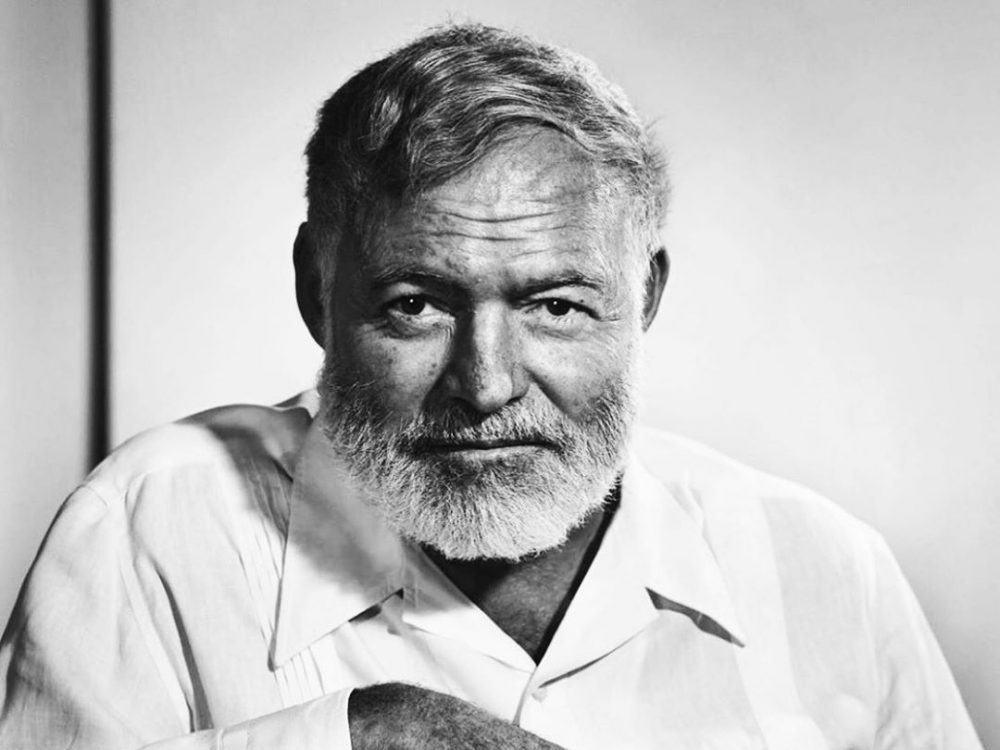
Hemingway is the king of short phrase: “Manuel walked toward the bull. The bull looked at him. His eyes were quick. The bull would not charge. Manuel could do this.” The quick, short phrases create a rhythm that propels you through the pages.
I did not think I would care for his last novel, The Old Man and the Sea, but from the first words, I was—let’s say—hooked. “He was an old man who fished alone in a skiff in the Gulf Stream and he had gone eighty-four days now without taking a fish. In the first forty days a boy had been with him. But after forty days without a fish the boy’s parents had told him that the old man was now definitely and finally salao, which is the worst form of unlucky…”
I’m wondering, now, where can you go, after reading Hemingway?
For me, it was Edith Wharton, who wrote novels with unique and memorable characters, and won the Pulitzer Prize in 1920 for The Age of Innocence. But I find her most enjoyable book to be The Custom of the Country, about a self-involved young beauty, Lily, who attempts to reach the highest levels of society at any cost. Wharton makes us care for Lily at the same time that we’re dismayed by her plots and values. Will she learn, from what she ultimately suffers?
Now I ask you, dear reader, where might I turn next? What have you read—or watched—that you loved?
Marvelous. I know my daughter’s married name, but I have a younger one, and she’s not married yet, so there is still time for me to mess it up.
Always Great to hear from you, Lucian. I’m wondering where you live now, some place in NY state? Warmest, Sara
I have always re-read favorite books, for various reasons. Your LOOSE CHANGE is one of those. I bought it after the TV miniseries, sure that the book would be better even though I’d liked the show. But I was 17 and did not know a lot of the cultural and historical references you wrote. As decades passed and I e experienced so much more, learned more, I enjoy the book all the more. It was especially fun realizing you were my mom’s age, because everyone used to say how cool it must have been to have such young parents in the 60s. But no, I said, because they remained hopelessly stuck in the 50s 😏 I would look at you and the other two and think wow, this is what she might have been.
Now, as to what to read now? My most current favorites are TOM LAKE by Ann Patchett (because I am a theatre person who adores OUR TOWN, and I lived near the cherry orchards in Traverse City) and HELLO, BEAUTIFUL by Ann Napolitano (because I lived LITTLE WOMEN. Still do.)
The Women by KRISTIN HANNAH. Couldn’t put it down…
Long ago when I was going through a transition and rebirth I took joy in reading all of Pat Conroy, perhaps because I grew up in the deep South. Or maybe it was the wit and verbal alacrity the characters display. They to speak as though they’ve had a day or so to re-write and practice so as to say what they wished they had.
I feel a slight sense of rejection that you aren’t interested in old men since I am one. On the other hand I’ve learned not to take such feelings personally. I’m writing a memoir that likely will never be finished, if finished never published and if published never read. The title I would like to use, but suppose I can’t, is “Twelve Years A Slave To Match Dot Com.” Meeting women online creates armor, or maybe calluses, to deflect the pain of unrequited longing.
sorry to be late in replying. I love the title you’d like to use — do it! “Twelve years a Slave to Match.com”. I met my current partner of eight years on match.com. so, you can never tell. regards, Sara
Anything by Elizabeth Strout, especially “Olive Kitteridge.”
She ties her themes together in each
Book through some characters that you’ll remember from other books of hers, but never makes any a sequel to another. Maybe you’ve already read her but if not, I think you’ll end up loving her work.
Recommending Cutting For Stone, The Eighth Life, The Lack of Light, Middlesex, Still Life.
Please read “Heart of a Stranger “ by Angela Buchdahl
CAN WE SEE OTHER PEOPLE’S RECOMMENDATIONS.
yes, once I approve comments you could see them at the bottom of the blog on my website Blog page. Warmest, Sara
Forgtfulness is prat of y life these days. I forget to lookm at my to-do list. I forget if I’ve taken my meds. And, I can’t emember names of anything. Sometimes it floats up ia ijute, sometimes itmtakes 3 days. Favorite audio books this year include The Correspondent and Theo of Golden.
I had to laugh as you described me. i’ve recently started losing things (my car in the lot) and forgetting what I was doing. Please keep writing!
Have you tried “The Memory of Running” by Ron McClarty?
No, haven’t read it. Do you recommend? thanks, sara
I just re-read my book about caregiving for my late-husband. I sucked at it, hated it, and before it was finally over, I hated him as well. I wrote about the experience in real time as a HuffPost senior staff writer. Now, 10 years and with a new husband, I recently re-read it. It’s rawness made me cry. The NYTimes called me the creator of the caregiver rage movement. And rage I did. I’ve been a fan of yours since I burned my first bra. May I send you a copy?
I’m with you on the memory issues as we age, but hemingway? Most overrated writer of the 20th century. not to mention his sexism and venration for the bloody, needless killing of animals for sport.
The Nightengale
Sorry, forgot to post author:
Kristin Hannah
Kane and Abel by Jeffery Archer
I love that you’re still writing. Keep it up! Let’s get together soon.
I’m late catching up on mail. LMK when you’re in Boulder so we can get togther. xx Sara
Sara, i love Un Unnecessary Woman by by Rabih Alameddine – about a woman who loves books. I’ve learned about so many new books from reading this novel!
Recently read Frozen River by Ariel Lawhon — loved it, as did everyone I know who read it.
Thanks for the rec. I just orderd it. warm regards, Sara
I have never been able to remember details from movies, even ones I’ve loved. So lately I’ve been doing with films what you’ve been doing with books: watching ones that I haven’t seen in a good while. In most cases it’s like watching for the first time. To name a few (which are obviously my taste): Calendar Girls; Taking Woodstock (fave!); Peace, Love and Misunderstanding; The Mountain Between Us; The French Lieutenant’s Woman (more out of curiosity than liking); Finding Your Feet… there are many more I intend to see again, but that’s about all I can remember now.
Thanks for the recomendations! Sara
Alas, I have to listen to books because I have only one good eye. But Hemingway and Wharton. are great choices for re-reading. I’ll just have to see if I can stand the reader. O
, definitely going to re-re- read Gatsby.
Always great to hear from you, Tracy. I know what you mean, the reader is everything. but I seem to remember the readers being ok. Warmest, Sara
And how could I forget Under the Tuscan Sun and Paris Can Wait!? Two greats, imho.
Hi Sara, I’ve followed your blog for some time, and as I’m also a writer and probably a bit older than you (late 70s), I especially resonated with this piece. First, thanks for countering some of the self-doubt that comes with losing recent and short-term memory. The idea that being able to watch movies I first saw decades ago, and enjoy them because I’ve forgotten much of the plot and especially the ending. (Recently, “The Treasure of Sierra Madre.”) I often can’t remember the name of a film or series that I watched last night, so my wife and I have taken to writing them down, along with the channel or platform, in a notebook so we can find them again. I read Hemingway and EWharton years ago also, but I don’t feel inclined to revisit them. But I would like to try this with Conrad and Poe, two of my fave authors teenage and later. I can readily recommend you try one of those. However, given my current involvement in following and researching the UFO Phenomenon, I might instead revisit some of my fave sci-fave sci-fi authors, such as Asimov and Herbert. Scifi novels are where I first read about telepathy and tele`pathic conversations, which is reportedly, on very reliable testimony from folks like Danny Sheehan, is how ETs communicate primarily. OK, that’s enough for now, but thanks again for your courage in posting this. I also resonated with your piece on diminished gearing, for which Ibwrote my own version(it was you, I hope). It’s available on my website, peterocchiogrosso.com under blogs, I believe. I owe that one to you also
Many blessings on you and your work. Peter
Forgive the late response to your comment. I’ll look into Conrad and Poe. Warmest, Sara
I’m here because I just finished reading “Loose Change” , a wonderful book that brings back memories of the events of my youth. Novel: “Her First American”, by Lore Segal. Film: “Dead End”, an Iranian film from 1977, directed by Parviz Sayyad featuring Mary Apick
Hi David, thanks for your kind words about Loose Change. I’ll check out your recomendations. Warmest, Sara
Always love reading your emails. Thank you and many blessings
Thanks for your kind words. It’s great to know someone is reading the blogs. Warmest, Sara
Hi Sarah , I also loved the Poisonwood Bible. I also liked The Custom of the Country because the protaganist was a person you love to hate. As my mother-in-law said she ruined the lives of everyone she met
Hi Terri, great to hear from you. I’ll re-read Custom of the Country because I remember nothing about it. (!)